Tuesday, 22 March 2011

Making Lovely Garden Compost

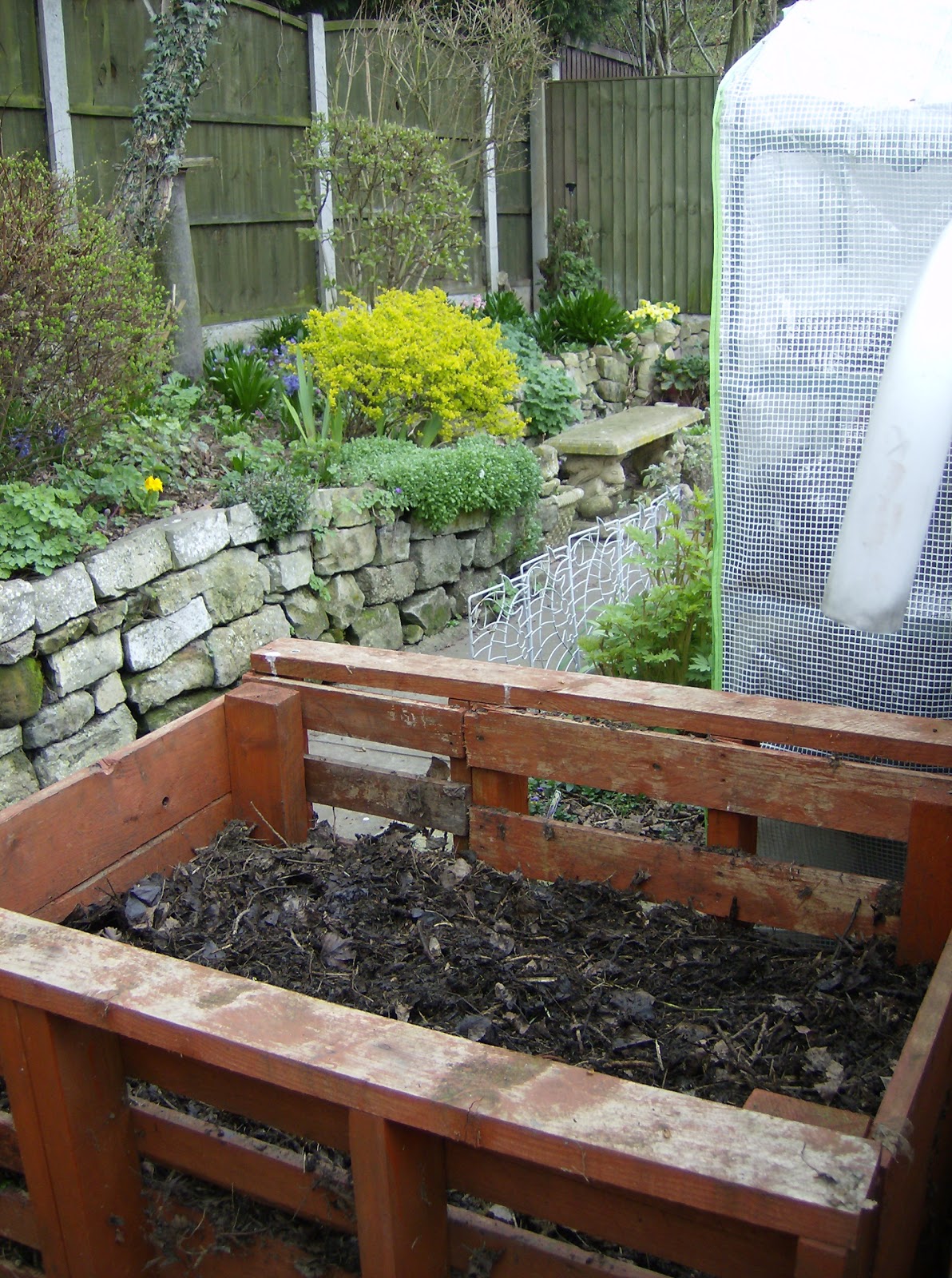
I love to make garden compost. It's a wonderful way of recycling  garden waste and putting nutrients back into the soil. It's a simple process provided you follow a few simple rules. First you need to make a compost heap. This can be just a free standing heap but it is usually better, and tidier, to have a compost bin. My first attempt at a compost bin was a container purchased from a gardening magazine which consisted of a metal frame with a rather flimsy plastic cover. This did not last for long and I then purchased a rigid plastic bin with a lid. This was rather like a bottomless dustbin with air vents in the sides. It looked a bit like a Dalek! Although it was large enough to take plenty of garden waste, it was difficult to turn and mix the contents. Also as it was completely covered it needed water adding regularly to keep the contents moist. It seemed to take a long time for the waste to rot down and produce a good usable compost so last year I decided to get rid of the plastic bin and build a timber compost bin. Using some old fence posts and wooden pallets I constructed a nice bin about 1.5 metres long by 1 metre wide and 1 metre high. This has performed much better and I already have some well rotted compost at the bottom of the bin which can be used to enrich the vegetable patch and top dress the flower borders. When starting a compost heap put some coarser material in a layer at the bottom of the bin. Not too woody plant stems or hedge clippings would be ideal. Then add layers of garden waste such as annual weeds, tops of perennial weeds, dead leaves, prunings and grass cuttings. Try not to have a large concentration of one type of material but mix it well. Water the heap if it is dry but not too much. It needs to be nicely damp, not soggy. To keep the heat in you can cover it with an old piece of carpet or tarpaulin. Heat and moisture and a good mix of ingredients are all you need to produce good compost. Air is also important as composting is an aerobic process. The easiest way to introduce air is by turning the heap. Any container should have adequate ventilation to allow air to flow through.
You can add kitchen scraps to the heap but never put cooked food, meat or dairy products onto it as these can attract vermin. Also avoid using any plant material which is diseased, any weeds with seed heads, perennial weed roots or animal waste.

Saturday, 19 March 2011

New Season Veg Patch

The last of the Leeks have now been lifted and the veg patch is being dug over ready for the new planting season. The first crop to go in this week will be the 'first early' potatoes. The variety I am growing this year is Arran Pilot which I have grown before. It is a good tasty potato which stores well.
Once the potatoes have been planted I will set up the bamboo canes in a wigwam formation ready for the runner beans. These will not be planted for at least a couple of months until the risk of frost is past. I like to mark out the areas where different crops are to be sown. Each year the type of crop is rotated to a different part of the veg patch to minimise the risk of disease building up in the soil. This method seems to be working well.
Lots of home made garden compost is dug into the veg patch each year to replenish the nutrients in the soil and this has resulted in a great improvement to the quality of the soil. I don't use any artificial fertilizers or any chemicals on my food crops. All my home grown veg is grown organically.

Cold Weather Casualties

There have been a few casualties of the extremely cold weather this year. The main loss is my evergreen Hebe shrub which had masses of white flowers throughout the summer, often flowering again during autumn and even into winter if the weather remained mild. I'm not sure of the exact variety of this Hebe as it was given to me by a friend many years ago. It is a shame to lose this shrub as it attracted lots of bees but I have decided to replace it with a couple of white flowered floribunda roses. I already have two 'Iceberg' floribunda roses in the front garden but, as they have never seemed to really thrive there, I will be moving them to the rear garden in place of the Hebe.
Other evergreen plants, such as the variegated Euonymous shrub, Holly bush and the Bay Tree, have also suffered with their outer leaves turning brown. At least they have survived and, with a bit of careful pruning, should recover their good looks. 

Wednesday, 23 February 2011

Daffodils

The weather is getting milder and the first of the spring bulbs in my front garden are coming into flower. The main spring bulb in the front garden is the daffodil (Narcissus). Most of the daffodils I grow are varieties of the smaller Cyclamineus Narcissus, which I find grow better in my garden than the larger trumpet daffodils. The bulbs multiply each year if left undisturbed and eventually make large clumps which can be divided once the leaves have died down.
These smaller daffodils are ideal for growing in pots which can be used to fill gaps in the borders. Make sure the pots have good drainage otherwise the bulb roots may rot. Use a soil based compost which will retain moisture for longer and plant the bulbs as deeply as you would in the garden border.
If you want to lift your bulbs after flowering has finished to make room for other plants, a good idea is to plant them in a lattice basket (the type used for pond planting) and bury this container in the soil. When flowering is finished lift the container and replant elsewhere as they need to remain buried while the bulb is still active. Once all the leaves have turned yellow the bulbs can be lifted, dried off and stored until replanting in the autumn. This is also a useful way of keeping track of your bulbs.
The varieties of small daffodils I grow are 'Jetfire' which has yellow outer petals and a bright orange trumpet; and Tete-a-Tete which has yellow outer petals and a golden trumpet. This is a vigorous variety which has up to three flowers per stem.
One larger variety of daffodil which I like to grow, and which does well in my soil, is 'Cheerfulness' which has a sweetly scented double white flower. If you can grow the larger later flowering yellow trumpet daffodils, try planting them behind clumps of blue aubretia. The blue and yellow look particularly lovely together.

Wednesday, 16 February 2011

Save Our Bees

There has been a lot of discussion lately about the decline in our bee population. This is a serious issue as bees don't just produce honey. By pollinating plants they are responsible for a third of the food we eat.
Various theories have been put forward regarding the cause of bee colonies dying, one of these being the rise of monoculture where large swathes of land are given over to single crops. The theory being that, like humans, bees need a varied diet to stay healthy. This is where gardeners can really make a difference by planting lots of nectar producing flowering plants which flower throughout the year. These could include crocuses, pulmonaria and fruit trees in spring, delphiniums, roses, lupins and flowering herbs such as rosemary, thyme and lavender in summer, and later flowering perennials such as salvia in the autumn.
Another way to help the bees is to provide suitable habitats. There are 3 general types of bee in Britain - honeybees, bumblebees and solitary bees. Honeybees live in manmade hives containing up to 70,000. Bumblebees are also social creatures, living in cavities in the ground containing around 300. The solitary bee usually lives in pairs in narrow holes in walls and in decaying wood. A dry stone wall at the bottom of my garden provides a good habitat for solitary bees and I once had a bumblebee nest in the side of a compost bin.
The use of pesticides can also have a negative impact, not just on the bees but on other beneficial insects. It is best to limit the use of these products, or better still stop using them altogether. Use soapy water for aphids and pick caterpillars and lily beetles off by hand. Plant native plants to encourage beneficial insects such as hoverflies which feed on aphids, a natural method of pest control. Increasing insect life in your garden also attracts other wildlife such as birds.
 

Saturday, 12 February 2011

Primroses and Polyantha

I have just planted some primroses in the front garden. I love the native primrose, Primula vulgaris, a compact plant which grows to about 6 inches in height and produces lots of small pale yellow flowers with darker yellow centres. This native primrose grows more robustly in my garden than the hybrid Polyanthus and each year spreads a little bit more.

The Polyanthus is a garden hybrid which is very popular for bedding and containers due to its beautiful and varied colour palette. The flowers are larger than the Primula vulgaris and are carried in large trusses on stout stems well above the leaves. If you want dramatic early spring colour then these plants are hard to beat. Some of the colours are so delicate the flowers look as if they have been hand painted. I can never resist buying a few each year. They are perennial plants and will flower again next year.  

Friday, 11 February 2011

My Lilac Tree is Saved

In December last year I wrote about my lovely old lilac tree which was brought down by the heavy snowfall. I have been cutting back and clearing the trunk which had split and fallen. Part of the trunk is still in the ground and there is new growth so it looks as if the tree will grow again from the base after cutting back. I am really pleased that the tree is not a complete write-off. It will be a while before I have all those beautiful scented lilac flowers covering the front garden every springtime, but I am sure they will be worth waiting for.
Meanwhile I need to tidy up, repair the damage to other shrubs and plants and replant to fill any gaps. There are quite a few bulbs coming through - dwarf daffodils and tiny blue irises. I would love to grow crocus bulbs but the squirrels love them and soon dig up any that I have planted. I don't mind too much though as I love to watch the squirrels in my garden.